After nearly 40 years in North Carolina government, Roy Cooper has carefully cultivated the image of a likable moderate. His record, however, reveals a different reality: that of a radical left-wing progressive. Now running for the U.S. Senate, the culmination of his life’s work would be to make the jump to Washington, D.C., the same way Frank Porter Graham, Terry Sanford and John Edwards did: moderate while campaigning, liberal when governing.
Lost amid this carefully polished facade of concern for everyday North Carolinians is the year he rarely mentions: 2020. That was when, as governor, Cooper wielded the full weight of government to impose policies that devastated public education, trampled personal freedoms and crushed small businesses across the state.
Most people extended grace to policymakers in the early days of the pandemic, specifically in March 2020. Cooper originally closed schools for a couple of weeks, as did every other state. But as evidence mounted that children faced low risk from the virus and that prolonged school absences carried severe consequences for learning and mental health, many states reopened classrooms. Cooper refused. He kept schools shuttered through the end of the academic year and deep into the following one. High school seniors were denied traditional graduations. Mask mandates dragged on. When the General Assembly passed bills to restore in-person instruction and give parents more options, Cooper vetoed them, prolonging battles that delayed normalcy for families.
The fallout was predictable and severe. Cooper’s stubborn closures triggered massive learning loss. Data from the National Assessment of Educational Progress (NAEP) confirmed that North Carolina students in several tested grades remained below pre-pandemic levels in key reading and math categories. Thousands of students, especially in low-income and minority communities, continue paying the price for decisions that prioritized caution over evidence.
One of the clearest examples of Cooper’s failures in 2020 was his handling of protests and riots. When the initial wave of the unknown passed, it was natural for many to worry about the effects of stay-at-home orders and quarantine policies. An organic uprising of concerned citizens took to the streets of Raleigh in late April and were instead met with derision from Cooper. He even attempted to close churches for months until it took a federal judge to declare: “There is no pandemic exception to the Constitution of the United States or the Free Exercise Clause of the First Amendment.” Cooper lost in court trying to restrict the freedom of worship in North Carolina.
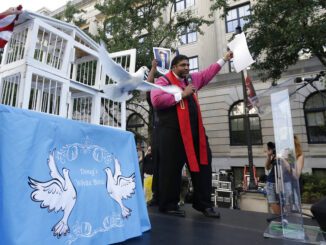
Contrast that with the riots that erupted in late May and early June. As downtown Raleigh saw widespread vandalism, broken windows along Fayetteville Street and chaos that forced a state of emergency, Cooper was conspicuously absent. When he did finally appear publicly, it was with these same leftist protesters near the governor’s mansion — fist raised in the air and a mask dangling from his ear like a campaign prop.
Cooper’s mismanagement extended to the economy. His reopening rules were arbitrary and ever-changing: restaurants could open, but bars remained closed; masks should be put on between bites of food and sips of coffee. These on-the-fly edicts sparked ongoing lawsuits from devastated family businesses and community staples that never recovered.
Adding insult to injury, his administration so badly bungled the delivery of federal unemployment benefits that WCNC Charlotte reported North Carolina as “the worst state in the U.S. for unemployed people” in 2020. He shut down livelihoods, then failed those who needed help the most.
Whether failing students through prolonged school closures, selectively enforcing restrictions on worship while excusing rioters, or destroying small businesses and botching aid, Cooper consistently made the wrong call in 2020. He prioritized his own political standing and progressive allies over the citizens who elected him — and he has never offered an apology to the families, educators, workers and owners he wronged.
In the U.S. Senate, expect the same pattern: Cooper will side with left-wing organizations and national power brokers over the working families of North Carolina. He cares far more about power than he does about you.
Matt Mercer is the communications director of the North Carolina Republican Party and former editor-in-chief of North State Journal.