North Carolina has become an increasingly important home for film and television production, and the state’s ability to attract and retain this kind of investment matters to our broader economic future. I was pleased to see that recent television shows here in our state generated more than $100 million in production spending and created 4,900 jobs for our local economy. Those benefits extend well beyond any single community, strengthening supply chains, small businesses and workforce opportunities statewide.
As a North Carolina business owner who has spent years working on economic development initiatives and public policy, I pay close attention to decisions that affect investment, job creation and consumer costs. That’s why recent discussion around a potential merger between Netflix and Warner Bros. Discovery (WBD) deserves a fair, thoughtful review. The discussion around a potential merger ought to be focused on long-term economic impact, not short-term politics.
At its core, debate should be about consumers and sustainable growth. The modern streaming market has become increasingly fragmented, forcing families to juggle multiple subscriptions just to access content they want. From a financial planning perspective, inefficiency and duplication rarely benefit the consumer. Instead, they drive up costs and reduce value. That’s not healthy competition; it’s a market weighed down by unnecessary complexity.
A combined Netflix-Warner Bros. platform would help address this problem by consolidating content, requiring fewer subscriptions and providing better long-term value. Importantly, this kind of consolidation would occur in a market that remains highly competitive. Consumers would still continue to see offerings from platforms and studios, including Paramount+, Apple TV+, Amazon Prime Video, Disney+, YouTube, YouTube TV and a host of short-form platforms. The result is a marketplace that delivers clearer choices and better value.
While recent headlines of a potential merger between Netflix and Warner Bros. Discovery have been met with questions and initial skepticism, when evaluated on the basis of consumer impact and free-market principles, it is clear that it warrants North Carolina’s support.
That is because there is a direct economic development consideration for North Carolina. Strong American media firms with the ability to invest in production, technology and infrastructure consistently are better positioned to support job growth. That isn’t just film production but also high-skilled roles in technology, marketing, logistics and data services. When companies have confidence in the rules, they are more likely to invest here.
Furthermore, Netflix has a proven track record and a willingness to invest in North Carolina, filming large projects that showcase our state, including hits like “Outer Banks.” As I consider the consumer impact the Netflix-WBD deal would have on American content and what it could do for film production in our state, it is clear that Congress should not overreach and let it through.
The entertainment market works the same as any other: People want more options and easy access to them. Combining Warner Bros.’ legendary library with Netflix’s technology and reach would mean more movies, more TV shows and more original content made under the same U.S.-backed umbrella. By cutting unnecessary overhead and licensing costs, more money can go straight into making great content and supporting the American workers who bring it to life.
This is not just good for business and consumers. It is inherently an America First approach. Foreign-owned and state-backed platforms, including some with ties to China, are rapidly expanding in the global entertainment market, with the United States as their primary target. Weakening American companies through heavy-handed or unpredictable rules does not help consumers, businesses or the country. It hands ground to competitors who do not share our values. Applying unpredictable or uneven regulatory scrutiny to U.S. companies simply undermines our ability to compete globally.
Conservatives have always believed the government should set fair rules, not punish growth or size for its own sake. The Department of Justice and Federal Trade Commission have cleared even bigger, complicated media deals before, including Disney buying Fox and Amazon buying MGM. Changing the rules now would raise real concerns about fairness and consistency. That consistency sends an important signal to investors, employers and workers alike.
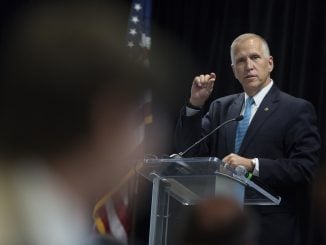
Sen. Thom Tillis has long emphasized the importance of economic growth, innovation and keeping America competitive. Families and businesses in North Carolina are watching closely to see if this merger is judged on its real benefits or blocked by ideology. With household budgets stretched and competition intensifying worldwide, the smart choice is the one that benefits consumers, supports workers, is pro-growth and strengthens America for the long term.
Letting the Netflix-Warner Bros. Discovery merger move forward does exactly that.
William Morgan is CEO of Capital Management Group of the Carolinas and former Statesville mayor pro tem.