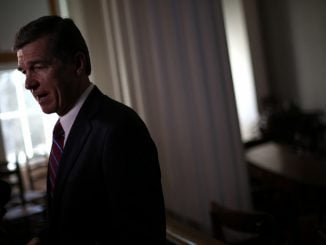
RALEIGH — Gov. Josh Stein released his recommended budget for the 2026-27 biennium last week, proposing total General Fund appropriations of $33.3 billion in the first year and $35.44 billion in the second.
The House and Senate originally agreed to $32.59 billion for FY 2025-26, and Stein’s budget proposal is $2.85 billion higher.
His previous budget proposal had similar spending, with $33.65 billion in FY 2025-26 and $34.35 billion in FY 2026-27. In March, Stein issued a $1.4 billion “critical needs budget” as the legislature still had not passed a state budget.
“North Carolina’s people are our greatest asset, and when they succeed, we succeed,” Stein said in a press release. “We must make fiscally responsible decisions now to keep our schools strong, our communities safe, and our economy working for every person. This budget is a balanced, forward-looking plan to secure our future, lower costs, and ensure that every North Carolinian has a shot at real prosperity.”
On the revenue side, the plan proposes roughly $378 million in “tax relief” for working families, including a refundable Working Families Tax Credit, a Child and Dependent Care Tax Credit and the reinstatement of a back-to-school sales tax holiday. Stein’s budget would pay for those items by halting further reductions to the individual and corporate income tax rates. The proposal claims a “fiscal cliff” has been created by previous income tax reductions.
The top spending increases in Stein’s proposal include “fully” funding Medicaid Rebase needs ($319 million for 2025-26 and more than $728 million for 2026-27) and includes a sweeping package of compensation increases for state employees and teachers.
Education remains the largest single category of state spending at 57% of the General Fund, or roughly $18.95 billion. Health and Human Services follows at 26% with $8.7 billion, and Justice and Public Safety at 12% with $4.09 billion.
The budget’s education section includes a proposed restructuring of the statewide teacher salary schedule, which Stein’s proposal says would bring North Carolina’s starting teacher pay from a current ranking of 45th in the nation to the highest starting salary in the Southeast.
Across all current teachers, the budget projects an average pay increase of 11% by the second year of the biennium and reinstatement of a 10% salary supplement for educators with master’s degrees in their subject area. Principals and assistant principals would see a 5% increase totaling $28.8 million.
Beginning teachers would earn a state base of $53,120 by FY 2026-27, up from $41,000 today, which translates to nearly a 30% increase over two years. Combined with local supplements, starting pay is projected in the proposal at a minimum of $56,338.
For experienced educators, the plan restores annual step increases through 25-plus years of service.
Beyond the salary schedule, the budget includes a one-time $1,000 bonus for all teachers and education employees with an additional $500 for those earning below $75,000 annually, plus a $300 classroom supply stipend that will total $30 million statewide.
The total cost of teacher compensation changes is listed at $734.4 million in recurring appropriations for FY 2026-27, plus $255.8 million in nonrecurring bonus funding.
Beyond educators, the budget proposes a 2.5% cost-of-living adjustment for all state employees in each year of the biennium, totaling $515.5 million in recurring costs by year two.
Employees in law enforcement and certified public safety roles would receive a 10% raise in FY 2025-26, growing to a cumulative 15% increase by FY 2026-27 that would cost $157.8 million. Nurses and other health care personnel at state facilities would receive the same tiered increase, totaling $31.8 million.
The total workforce investment package, including retiree adjustments and bonuses, reaches $919 million in recurring appropriations by the second year.
Like his predecessor, former Gov. Roy Cooper, Stein is proposing a moratorium on the state’s Opportunity Scholarship program, which provides grants on a sliding income scale to families for private school tuition. The proposal would issue no new vouchers and would roll the program back to its preexpansion eligibility of requiring households earn no more than 150% of the reduced-price school lunch income threshold.
Stein’s changes to the program would allow families who received vouchers in the 2025-26 school year to renew their awards.
The governor’s budget projects the moratorium would reduce appropriations by $454.5 million in FY 2026-27 and $587.5 million in FY 2027-28, with an included summary table listing a total savings figure of $1.042 billion by year two.
Other priorities in the budget include nearly $1 billion for a package spanning behavioral health, public safety and nutrition assistance, funding for 360 new school health professionals, school safety grants and continuation of the state’s SNAP program administration.
The budget also proposes $100 million for student technology devices, $115 million for public school facility repairs and $80 million for rural broadband infrastructure.
The proposal has been sent to the General Assembly for consideration. The legislature began its short session last Tuesday and is expected to pass its own overdue budget in the coming weeks.