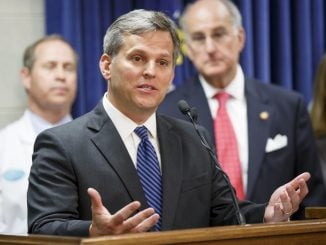
RALEIGH — A bill changing N.C. Division of Motor Vehicles online services has been signed into law by Gov. Josh Stein.
“This law will enable more people to renew their driver’s license online, helping them avoid lines at DMV offices,” Stein said in a press release. “It will also strengthen the state’s ability to protect against cyber threats.”
Senate Bill 245 expands the N.C. Division of Motor Vehicles’ (NCDMV) remote services for driver’s licenses by allowing drivers to renew their licenses, obtain full provisional licenses or convert licenses remotely via mail, phone or online.
Remote renewal of a Class C driver license requires having an existing valid Class C license with the most recent renewal having been completed in person with a new photo taken. An individual may renew remotely two consecutive times if the license isn’t REAL ID compliant or if a switch is being made from a REAL ID to a non-REAL ID license.
To get a full provisional graduated license remotely, drivers who are at least 16 but not older than 18 must have held a valid limited provisional license for at least 6 months and had no tickets for moving violations, seat belt issues or impaired driving citations in the last 6 months. A driving eligibility certificate, high school diploma or equivalent is also required, but a big change the law makes is dropping the requirement of a 12-hour driving log for teens seeking a full provisional license.
To upgrade a full provisional license to a regular license remotely for those 18 or older, the driver must have a valid full provisional license and be at least 18 years old.
The law became effective upon signing Sept. 30 and applies to licenses issued or renewed on or after that date.
Additionally, the law makes a technical correction unrelated to NCDMV services by updating a statute on embalming fluid possession violations, effective Dec. 1.
Another provision includes appropriations of $5 million for eCourts implementation and $15 million for cybersecurity, both of which are retroactively effective July 1. Another $1.4 million is allocated for State Bureau of Investigation administrative positions and $3 million for State Highway Patrol hires, which are also retroactive to July 1.
The new law follows rising complaints across the state about NCDMV wait times and backlogs.
In August, State Auditor Dave Boliek released an audit on the NCDMV’s operations that showed the average customer wait time was 1 hour and 15 minutes, a 15.5% increase since 2019. Additionally, upward of 14% of NCDMV visits went beyond 2½ hours in fiscal year 2025, which is a 79% increase from 2019.
The NCDMV was the subject of multiple hearings at the state legislature over the past year.
During a House Oversight and Reform Committee hearing last June, state lawmakers grilled NCDMV Commissioner Wayne Goodwin and Idemia representative Lisa Shoemaker over a software glitch that improperly allowed 2,136 license renewals, leading to a backlog of more than 350,000 credentials and delays of up to two months for residents.
Goodwin defended the agency’s improvements while blaming Idemia for production delays and conflicting information. Shoemaker countered that NCDMV misled them on contract processes and failed to approve overtime proposals.
Lawmakers also raised concerns about NCDMV’s selective interpretation of state laws on central credential production and color photos on licenses amid an ongoing lawsuit from Idemia, fee hikes for services and proposals to shift the commissioner’s appointment to the governor.
Goodwin announced in March that he would not seek to retain his job as NCDMV commissioner. By the end of the following month, the N.C. Department of Transportation issued a statement that Paul Tine would take over Goodwin’s role.