RALEIGH — The North Carolina Office of the State Auditor released two audits of the state’s Division of Motor Vehicles last week. One report is a 435-page performance audit, and the other is a 159-page information systems audit.
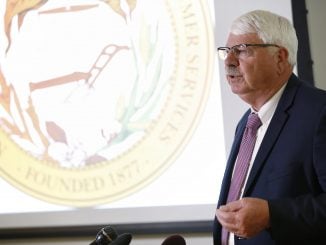
“I pledged to audit the DMV to get to the root cause of its failure, and the reports dealing with licensing procedures and information systems are now complete,” N.C. State Auditor Dave Boliek said in a press statement. “Our audit team has worked hard to find opportunities where the DMV can course correct and effectively serve North Carolina citizens.”
The North Carolina Office of the State Auditor’s (OSA) performance audit shows customer and DMV employee experiences have steadily worsened over the years, but the report cited the “dysfunctional” relationship between the N.C. Department of Motor Vehicles (NCDMV) and North Carolina Department of Transportation (NCDOT) as a factor.
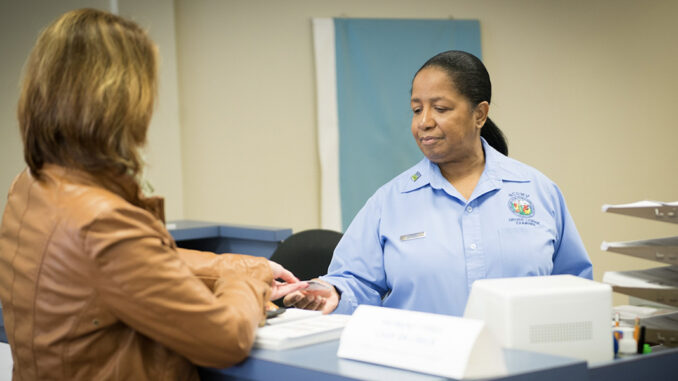
According to the findings of the performance audit, the average NCDMV wait time is 1 hour and 15 minutes, a 15.5% increase since 2019. Additionally, upward of 14% of NCDMV visits went beyond 2½ hours in fiscal year 2025, a 79% increase from 2019.
“I’m a dog with a bone on this,” Boliek said when asked what he would say to people waiting in long NCDMV lines. “And that we are going to continue to shine a light on the DMV and put this forward front and center on the front burner until it’s fixed.”
Another key point in the report says NCDMV’s performance metrics fail to capture total customer wait times and lack a robust measurement system, a continuing issue from a 2018 audit.
Lack of training, low salaries and employee burnout were also detailed in the report, with some NCDMV employees facing threats from customers while on the job. Staffing shortages were identified as a serious problem, and staff hiring has not kept up with the state’s population growth.
The data showed 505 out of 721 driver’s license examiner positions are currently filled with 160 position vacancies. Haywood County was given as an example, where only one examiner is serving more than 56,000 residents.
During an Aug. 4 press conference, Boliek said the NCDMV had limited strategic input, limited budget autonomy, not enough performance data, and the NCDOT excluded the agency from certain modernization initiatives.
Underscoring the budgetary point, Boliek noted that 30% of NCDMV revenues go to the NCDOT, but the DMV is “only 2.8% of DOT’s expenditures.” Between 2019 and 2025, the NCDMV requested 130 new staff positions, but only 40 (31%) were included in NCDOT budget requests.
Boliek laid out the audit’s five recommendations during the press conference, including making the NCDMV an autonomous agency with direct control over budgeting, strategic planning and operations.
“The impetus behind the DMV being pulled out from under the DOT, it involves accountability,” Boliek said when asked about making the NCDMV its own agency. “The commissioner should report directly to the governor; it’s that important.”
Other OSA recommendations included in-depth staffing analysis, a centralized performance dashboard and partnering with industry experts to improve customer service.
The recommendations also included delivering a draft strategic plan with goals and performance metrics to the General Assembly and the Governor’s Office “within 9 months,” followed by “annual public reporting on progress and updates.”
The information systems audit findings show that from 2014 through the audit date, 46 modernization projects were initiated that cost approximately $42 million, yet they did not produce “meaningful customer service improvements.” Additionally, the NCDMV’s mainframe systems are outdated and need to be replaced.
During the press conference, Boliek also discussed issues with teens obtaining their licenses and said driver’s education instructors should be able to certify road tests, stating, “This will save 35 minutes per examiner.”
Erin Van Dorn, the mother of a teen driver in Wake County, highlighted how difficult it is for a teen to get a license. She said she and her son crisscrossed the state to get her son his road test, making four trips to multiple NCDMV offices outside of Wake County — some of which were up to three hours away.
“Currently, the general statute requires students under the age of 18 applying for a permit or license to possess a driving eligibility certificate that is dated within 30 days of the application for the permit,” said Boliek. “This, just quite frankly, needs to be eliminated.
“If you can’t get an appointment, there’s no way for that in a 30-day time period. It’s just too short. Also, individuals should not really have to go in person three times before turning 18 to get a driver’s license. We’ve got to reform that.”
Boliek added that NCDMV Commissioner Paul Tine and NCDOT Secretary Joey Hopkins were “hard at work on that right now.” He also mentioned a Senate bill to expand remote service options for driver’s licenses had passed the House but needs action by the Senate to be sent to the governor.
A legislative hearing last spring highlighted families across the state frustrated with the NCDMV’s teen driver process, as well as being dissatisfied with driver’s education courses offered by school districts.
The auditor also mentioned the failure of the self-service kiosk program rolled out by former NCDMV Commissioner Wayne Goodwin. He said the kiosks placed in grocery stores were not meeting the 500-user-a-month threshold and should be moved to NCDMV offices.