“Only one thing is needed. Mary has chosen what is better.” Luke 10:42
Paul prayed that his friends “may be able to discern what is best.” Philippians 1:10.
We must be always making choices in this world. We cannot take up everything that lies in our path — and we ought to choose the best things. Even among ‘right things’ there is room for choice, for some right things are better than others.
There are many Christians, however, who do not habitually choose the best things — but second-rate things. They labor for the food that perishes — when they might labor for the food that endures unto everlasting life. Even in their prayers, they ask for temporal blessings, when they might ask for spiritual treasures.
Our Lord said plainly, “Seek first his kingdom and his righteousness, and all these things will be given to you as well.” Matthew 6:33. This is the great rule of Christian choosing. The lesser things are not always wrong in themselves, but they become wrong when they crowd out the greater things. Food, clothing, gain, comfort, success and honor all have their place; yet none of them should be first. The soul was made for God, and it is poor indeed when it spends itself only on what the hand can hold and the eye can see.
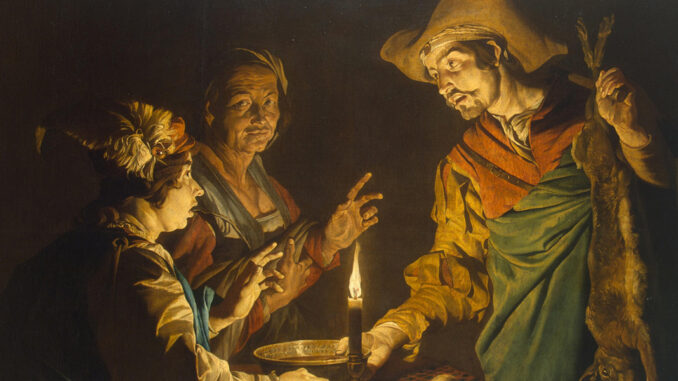
They are like “the man with the muck-rake” in Bunyan’s “Pilgrim’s Progress” — who only looks “down” and drags his rake among the weeds and worthless rubbish — while over his head are crowns which he might take into his hands. They are like Esau, who sold his valuable birthright for some lentil stew. They toil for this world’s vain things — when they might have been laying up treasures in heaven.
Esau’s peril is the peril of all who live hastily and for this world. A present appetite seems larger than a future blessing. A little ease, a little pleasure, a little gain, appears for the moment to be worth more than obedience, holiness, and peace with God. But the bargain is always a poor one. No stew, however savory, can pay for a birthright once thrown away.
We only have one life to live — and we ought therefore to do the best we possibly can with it. We pass through this world only once — and we ought to gather up and take with us the things that will truly enrich us — things we can keep forever.
It is not worth our while, to toil and moil, and strive and struggle — to do things that will leave no lasting results when our life is done — while there are things we can do which have eternal significance.
Moses made the wiser choice. He refused the treasures of Egypt, choosing rather to suffer with the people of God, because “he was looking ahead to his reward.” Hebrews 11:25-26. This is the faith that sees clearly. It measures things not by their present brightness, but by their eternity. It asks not only, “What will this bring me today?” but also, “What will this be worth when I stand before God?”
“Set your hearts on things above, where Christ is seated at the right hand of God. Set your minds on things above, not on earthly things!” Colossians 3:1-2
J. R. Miller was a pastor and former editorial superintendent of the Presbyterian Board of Publication from 1880 to 1911. His works are now in the public domain.