RALEIGH — The annual statewide single audit was released last week, examining $28 billion in federal grants spent by state agencies for the 2025 fiscal year.
The report by the North Carolina Office of the State Auditor (OSA) examined $43.9 billion in federal funds and found Medicaid made up “more than half” of expenditures. A total of $28 billion in federal money received was examined, with questioned costs totaling $342,093 across the report’s 19 findings.
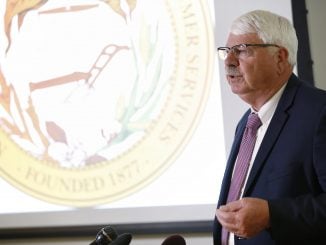
“The federal government administers a massive amount of funding. Look no further than the $24.7 billion flowing through Medicaid,” State Auditor Dave Boliek said in a press release. “This annual audit gives us a chance to examine at a high level how federal grants are used in North Carolina and where there may be questionable expenditures.”
An “improper payment of $113,115” made by the North Carolina Department of Health and Human Services (NCDHHS) was found, but the report said the funds have been recouped.
Of the eight findings involving NCDHHS, the two issues were identified totaling $138.8 million where subawards to counties did not have the required reporting. A referral was made to the corresponding federal agencies to determine if other recovery efforts should be made.
According to the report, the Department of Commerce found the department “lacked adequate internal controls,” such as review procedures. The lack of controls resulted in $873 million in overstatements and more than $260 million in understatements.
The breakdown of those misstatements includes intergovernmental payables being overstated by $500 million and unemployment benefits expenses overstated by $372.8 million, while noncapital grants were understated by $195.2 million and net accounts receivable were understated by $67.3 million.
“It’s our duty at the state level to make sure any funds directed to North Carolina are used properly and responsibly,” Boliek said. “While the single audit provides a high-level financial overview, the work done by our team and the findings and questioned costs will help steer us toward deeper dives into Medicaid and other areas of government spending.”