Feb. 12
1554: Lady Jane Grey, who claimed the English throne for nine days, and her husband, Guildford Dudley, were beheaded after being convicted of high treason.
1809: Abraham Lincoln, the 16th president of the United States, was born in a log cabin at Sinking Spring Farm near Hodgenville, Ky.
1909: The National Association for the Advancement of Colored People was founded in New York City.
Feb. 13
1945: Allied forces in World War II began a three-day bombing raid on Dresden, Germany, killing as many as 25,000 people and triggering a firestorm that swept through the city center.
1935: A jury in Flemington, New Jersey, found Bruno Richard Hauptmann guilty of first-degree murder in the kidnap-slaying of Charles A. Lindbergh Jr., the 20-month-old son of Charles and Anne Morrow Lindbergh. (Hauptmann was executed the following year.)
1965: During the Vietnam War, President Lyndon B. Johnson authorized Operation Rolling Thunder, an extended bombing campaign against the North Vietnamese.
Feb. 14
1779: English explorer James Cook was killed on the island of Hawai’i during a confrontation after Cook’s attempt to kidnap Hawaiian monarch Kalaniʻōpuʻu as leverage to recover a boat stolen from one of Cook’s ships.
1876: Inventors Alexander Graham Bell and Elisha Gray applied separately for patents related to the telephone. (The U.S. Supreme Court eventually ruled Bell the rightful inventor.)
1929: The “St. Valentine’s Day Massacre” took place in a Chicago garage as seven rivals of Al Capone’s gang were gunned down.
Feb. 15
1879: President Rutherford B. Hayes signed legislation allowing female attorneys to argue cases before the U.S. Supreme Court.
1898: The battleship USS Maine mysteriously exploded in Havana Harbor, killing more than 260 crew members and pushing the United States closer to war with Spain.
1933: President-elect Franklin D. Roosevelt survived an assassination attempt in Miami that mortally wounded Chicago Mayor Anton J. Cermak.
Feb. 16
1862: The Civil War Battle of Fort Donelson in Tennessee ended with the surrender of about 12,000 Confederate soldiers, a Union victory that earned Gen. Ulysses S. Grant the nickname “Unconditional Surrender Grant.”
1923: The burial chamber of King Tutankhamen’s recently discovered tomb was unsealed in Egypt by English archaeologist Howard Carter.
1959: Fidel Castro was sworn in as premier of Cuba, six weeks after dictator Fulgencio Batista was overthrown and fled into exile.
Feb. 17
1801: The U.S. House of Representatives broke an electoral tie between Thomas Jefferson and Aaron Burr, electing Jefferson president and making Burr vice president.
1864: During the Civil War, the Union ship USS Housatonic was rammed and sunk in Charleston Harbor, S.C., by the Confederate hand-cranked submarine HL Hunley in the first naval attack of its kind; the Hunley also sank.
Feb. 18
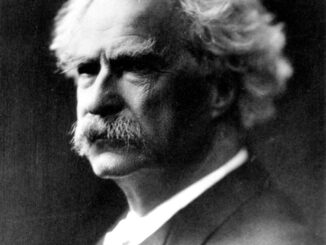
1885: Mark Twain’s “Adventures of Huckleberry Finn” was published in the U.S.
1930: The dwarf planet Pluto was discovered by American astronomer Clyde Tombaugh.
1970: The “Chicago Seven” defendants were found not guilty of conspiring to incite riots at the 1968 Democratic National Convention; five were convicted of violating the Anti-Riot Act of 1968 (those convictions were later reversed)