This is Part 2 of a two-part interview. Read Part 1.
RALEIGH —North Carolina Rep. Destin Hall (R-Granite Falls) has plenty on his plate heading into his second year as speaker of the North Carolina House.
Among them is affordability, a term Democrats have increasingly used when criticizing the Trump administration and Republicans in general heading into the midterm elections. Adding to citizen economic concerns is the rise of AI and related data centers.
Such centers have drawn sharp complaints from residents in some areas where those facilities are already located or where a center is being planned. The energy and water consumption of data centers has been the main point of tension, often with area residents bearing the brunt of rate increases.
A recent report by Gov. Josh Stein’s Energy Task Force says energy rates in the state increased 22% between 2024 and 2025, and data centers account for about 30% of Duke Energy’s tracked projects but represent 80% of the projected energy demand. The report also says Duke’s 2025 load forecast projects an increase “between 16% to 60% over the next 15 years,” but the last two decades combined saw a 7% increase.
Currently, Duke Energy is seeking a 15% rate increase over the next two years — an increase N.C. Attorney General Jeff Jackson said he is “intervening” in and which Gov. Josh Stein has spoken out against.
Hall said AI and data centers are “something our members are hearing about.”
“I have been places where some of those centers have sought to locate, and ultimately it comes down to the price of energy,” said Hall. “And those centers who are building these new facilities … really, they ought to pay for the consumption that they’re causing on the system. That’s the fair way it’s supposed to work. It’s just like with property taxes.”
Hall noted some communities give economic incentives to bring data centers into their area, which reduces what the data center has to pay, but those centers are consuming vastly more energy than a local business or resident.
Hall acknowledged AI is a new, evolving area with shifting needs and issues, including data centers, but also said the AI space in these technology companies “make a ton of money” and “certainly can afford to pay their own way and not have to have taxpayer support for it.”
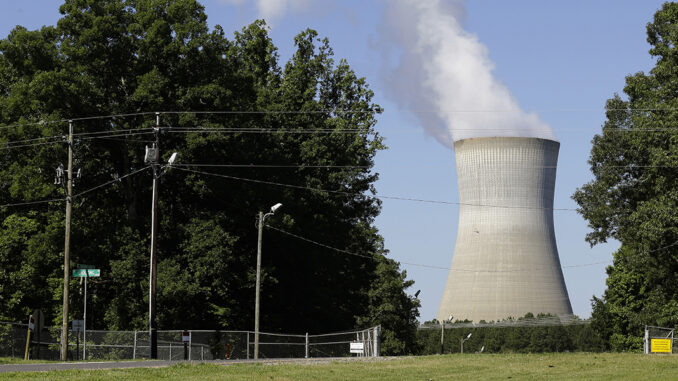
The rise of mobile nuclear reactors in areas around the country might need to be addressed by lawmakers, Hall said.
“We know Duke is trying to do more of the small, modular nuclear reactors in the state,” Hall said, “and long term, it’s a positive thing because it should make the price of energy cheaper.
“This past session, we passed the Power Bill Reduction Act, which made it clear that we’re not going to do green energy mandates in North Carolina. The result of those green energy mandates only raises the power bill for folks.”
He noted “the Democrats fought us” on the bill, but a handful of Democrats went along with Republicans, showing “the commonsense nature” of the bill to make power and energy as “cheap as we possibly can.”
The Power Bill Reduction Act’s key provision eliminated the 70% emissions reduction by 2030 put in place by a 2021 law, replacing it with a goal of 2050. The act passed mostly down partisan lines in both chambers last year. Gov. Josh Stein vetoed the measure, but Republicans overrode it with help from three House Democrats.
“The reason that Duke ultimately had to shut down their coal-fired plants was because you had Democratic presidents at the federal level,” Hall said. “They would get elected; they would issue a bunch of regulations making life impossible on power companies that use coal-fired plants.
“With nuclear, you don’t have this issue that environmental concern in terms of the exhaust that comes off of it; obviously, nobody wants to have a nuclear reactor in their communities. You’ve got to be strategic about where you place these things in areas where it’s further away.”
Hall said that long term, nuclear is the most efficient power source right now to provide enough energy to the state. He said he knew Duke Energy was looking at nuclear sources — “I think it’s the way that we’d like to see them to go.”