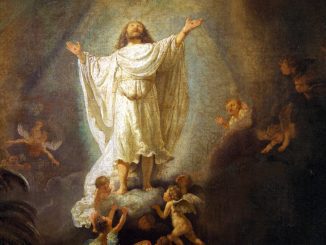
We have no picture of Christ. Artists through the centuries have imagined his face and painted it with reverence and skill, some of them wondrously winning. Yet these are only human conceptions of a life so loving, so pure, so gracious, and so true. In the end, it is not the physical face of Christ whose beauty we are called to seek, but his inner grace — the spirit, the disposition, the qualities of mind and heart that shaped everything he did.
Perhaps we do not think enough about beauty of character when we form our idea of Christian life. It is one thing to stand before others and say, “I am a Christian,” and another thing altogether to grow into the loveliness of Christ himself. One may sincerely confess Christ, honestly take his side, and yet still be full of faults — a beginner who has much to learn and many beautiful qualities of Christian character yet to acquire.
The apostle Paul tells us that we are to have in us “the mind which was in Christ Jesus.” That is, we are to be like Christ — to share his spirit, his temper, his principles. The life of Christ as people saw it must become the pattern of our own lives. The Gospels do more than record his deeds and words; they reveal his sympathy, his kindness, his patience with people, and his endurance of misunderstanding and wrong.
One quality Paul emphasizes as central to the mind of Christ is love among believers. Christians are meant to live together in peace and true fellowship. This is no small challenge. People differ widely in temperament, opinions, tastes, and circumstances. Even in the church at Philippi — remarkable for its harmony — there were strained relationships. Two women who had once labored together in love had become estranged, and their division blemished the fellowship of the church.
Quarrels among Christians always wound the spirit of a congregation. Those who love Christ should never be content to live in bitterness or rivalry. We are not meant to insist on always having our own way. Often another person’s way is just as good as ours; even when it is not, the harm caused by contention usually outweighs the benefit of winning. Unity invites God’s blessing; strife drives it away.
Paul pleads earnestly for harmony, comparing discord to music played out of tune — painful to the ear and distressing to the heart. From his prison in Rome, he writes that the unity of the Philippians would “make full” his joy. Pastors understand this well. Few things burden a shepherd more than conflict among his people, and few joys are sweeter than seeing them live together in love.
Paul urges believers to do nothing from selfish ambition or vain glory. A quarrelsome spirit, a desire to rule, or to insist on preeminence is foreign to the mind of Christ. Instead, Christians are called to prefer one another in honor. If others are difficult, that is not permission for us to be so as well. In fact, it is then that we are called to be gentler. The truest Christian is often the one who bears the most — and remains the sweetest.
Another essential element of the mind of Christ is humility. “In humility of mind,” Paul writes, “each counting the other better than himself.” We are quick to measure ourselves by education, experience, or position, yet none of these grants the right to assert superiority. Even if we truly are stronger or wiser, that only increases our obligation to serve.
Christ himself modeled this humility. Knowing his divine glory and destiny, he performed the lowest service for those far beneath him. Superiority, in the kingdom of God, means responsibility. The greatest have the most to give; the best are called to help the most.
To have the mind of Christ is to share his love, his interest in people, his spirit of condescension and service. Paul’s great description of love — patient, kind, humble, enduring — was not an abstract ideal. It was transcribed from Christ’s own life. He was never rude, never harsh, never weary in helping. His power was always clothed in gentleness.
There is a way of doing good that wounds rather than heals — service marked by pride or lack of delicacy. Christ’s kindness was never like that. Help without love can still hurt. The mind of Christ orders love rightly.
True devotion never neglects plain, present duty. Our Lord never withheld his hand from human need, yet he did not abandon those nearest to him while serving others. He did first duties first. Many mistake distant or showy service for faithfulness, while leaving undone the obligations that lie closest at hand. Such inconsistency has no place in the mind of Christ. To have his mind is not to select a few admired traits from his life and imitate them, but to receive his whole spirit into our own. We are not to adorn a lifeless branch with borrowed flowers, but to live from the life of Christ himself.
J. R. Miller (1840-1912) was a pastor and former editorial superintendent of the Presbyterian Board of Publication from 1880 to 1911. His works are now in the public domain. This is an edited version of his original.