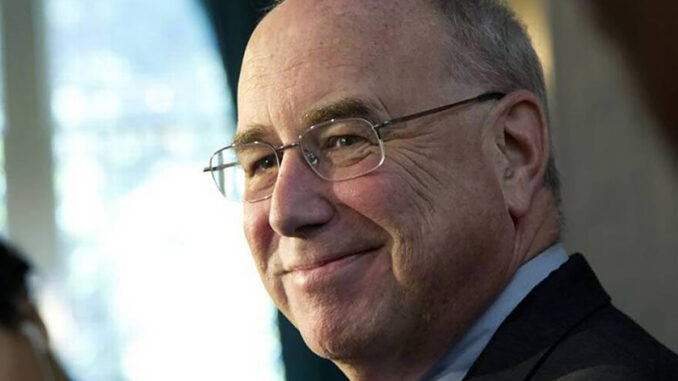
RALEIGH — NCInnovation, a taxpayer-backed university research and development accelerator organization, reviewed an internal investigation report involving complaints by one of its board members at a meeting on Aug. 13.
NCInnovation (NCI) is a nonprofit aimed at “accelerating commercialized innovation” of the state’s public university research and development projects.
The North Carolina General Assembly appropriated $500 million across two equal tranches in endowment funds for the organization to conduct its work. Of that, $140 million was authorized for direct spending by NCI, but the group invested the principal amount instead and gained $20 million in interest. The group raised an additional $25 million in outside funding for operational overhead expenses.
The internal investigation report relates to disputes involving NCI Board Member Art Pope, the founder of the conservative John Locke Foundation (JLF) and the owner/operator of Roses and Maxway stores. Pope was appointed to the board by former N.C. Speaker of the House Tim Moore.
From the onset of his appointment, Pope has consistently questioned the organization’s operations, and JLF — through its news arm Carolina Journal — has been critical of public funds given to NCI.
Prior to his appointment, Pope, along with other businessmen, signed onto a letter to House lawmakers urging against the funding. Once on the board, Pope filed complaints with the state auditor about NCI’s accounting practices. An audit was conducted and found NCI in compliance with general accounting practices.
Additionally, ahead of the NCI board meeting, JLF CEO Donald Bryson sent a memo to lawmakers urging the clawback of the funding, citing “statutory noncompliance” and loss of “legislative and public trust.”
To address Pope’s mounting complaints, NCI formed a special litigation committee (SLC), chaired by board member Ven Poole. The SLC engaged K&L Gates LLP to assist in the investigation, which was led by Bobby Higdon, the former federal prosecutor for the state’s eastern district.
Over the past 18 months, the SLC met for 17 hours over 15 meetings. The investigators collected more than 400,000 NCI documents, 100,000 of which were ultimately weighed and considered as relevant to the investigation.
Two written reports were produced, with one addressing the 17 allegations made by Pope of inappropriate conduct by members of the board and/or NCI staff. Alternatively, employees reportedly have debated leaving due to the hostile working conditions that Pope’s conduct has allegedly created.
“Ultimately, the Special Litigation Committee found 16 of those allegations to be totally unsubstantiated,” Poole told the board as he read the results of the investigation.
Poole said the outstanding allegation had already been resolved prior to Pope submitting it to the board.
The committee found Pope’s claims he had been threatened or intimated had no merit, citing emails from other members who did not like the “tenor” of Pope’s complaints but welcomed constructive criticism, with the example that “Director Pope is entitled to his opinion and can act as he sees fit.” The same outcome was true for other claims Pope made regarding threats and retaliation by other staff.
According to the SLC, dealing with Pope’s complaints, his large documents requests and handling complaints filed against Pope cost NCI more than $698,000. That total did not include work of the SLC, which was over $1 million and included consulting and attorney fees.
“Importantly, this costly work was requested by and voted for by Director Pope. Yet when the time came for basic cooperation with the SLC, he denied such requests,” Poole said. “Not only did Director Pope refuse to be interviewed unless his individual conditions were met, which other directors did not request, he refused to simply come in and discuss his own concerns with K&L Gates.”
Poole later reiterated that the full cost was arguably “corporate waste” and that “the cost of the work is directly attributable to Director Pope.”
Earlier in the presentation, it was stated every director of the NCI board was interviewed by the SLC except for Pope, who declined an interview and submitted a written statement instead. Pope later argued he didn’t agree to an interview due to lack of information.
“For the record, I did offer to meet with them and have a discussion — I think that is what Ven Poole referred to — a discussion,” said Pope. “I asked if I could have basic written notice of the charges that were against me, what evidence were against me, basic due process.”
When the presentation ended, Pope asked to respond and was given around 20 minutes, which he used to relitigate the complaints he had already raised over the last year, claiming he was “trying to make NCInnovation better by complying with the law on audit tests.”
Regarding the SLC, Pope said he voted against the creation of it, and he’s been “very frustrated with SLC, they may have been frustrated with me.”
“If we ever get an independent hearing in front of an independent judge, which I welcome, we’ll see about who said what,” Pope told the other board members.
After about 15 minutes of Pope discussing the report, the board chair tried to cut his time off, saying they had a full meeting to continue with. However, Pope was allowed to continue for several minutes more, saying he “welcomes an open debate in a public forum.”
The report recommendations were distributed to the members, and Chair Kelly King said they would be voted on at the board’s upcoming November meeting, adding, “I hope we can all come together and support this good work.”
“And those that are hearing this and don’t know the whole story, I will say to you, with my reputation on the line, I am very proud of this organization, I am very proud of the team, I am very proud of the board. I appreciate all the hard work. Good stuff is being done and we want to continue to do that.”
After Pope finished, there was some additional back-and-forth moments, including King implying that unhappy board members should feel free to resign. Pope commented that only the General Assembly has the authority to remove him before his appointed term expires in 2027.
“If you want me to resign … you want to vote me off the island because I’m not sufficiently deferential, ask too many questions … well, the appointing authority is the General Assembly,” Pope said. “They’re the ones where that lies. And as long as NCInnovation has public money, I will do my duty to NCInnovation, make it better, in compliance with the law, and maintain that public trust.”
The SLC’s results come as lawmakers in both the House and Senate have been considering clawing back NCI’s funding to put toward other state needs.
In May, NCI announced $13.7 million in grants to 12 UNC System schools for work on 17 projects in the areas of agriculture, livestock, vaccines, cancer treatments, Alzheimer’s therapy and other health care research areas.
Five other states — Georgia, Kentucky, Massachusetts, Ohio, and Texas — have made research and development investments like what the North Carolina legislature has done with NCI.
North Carolina’s northern neighbor appears to be getting in on fast tracking university research for commercialization. On the same day NCI held its meeting, Virginia Gov. Glenn Youngkin announced a new “Lab-to-Launch initiative” aimed at “accelerating university research commercialization and technology transfer.”
Youngkin made an appearance in North Carolina this past June, giving a keynote speech at the NC Republican Party Convention in Greensboro.